

Living with Primary Biliary Cholangitis can mean carrying experiences that other people cannot see.
For people with PBC, symptoms such as fatigue, brain fog and itching can have a significant impact on everyday life, even when someone appears well. There can also be the challenge of explaining a rare condition that many people have never heard of, or correcting assumptions about what caused it.
For members of the PBC WA Support Group, connecting with someone who already understands can make a difference.
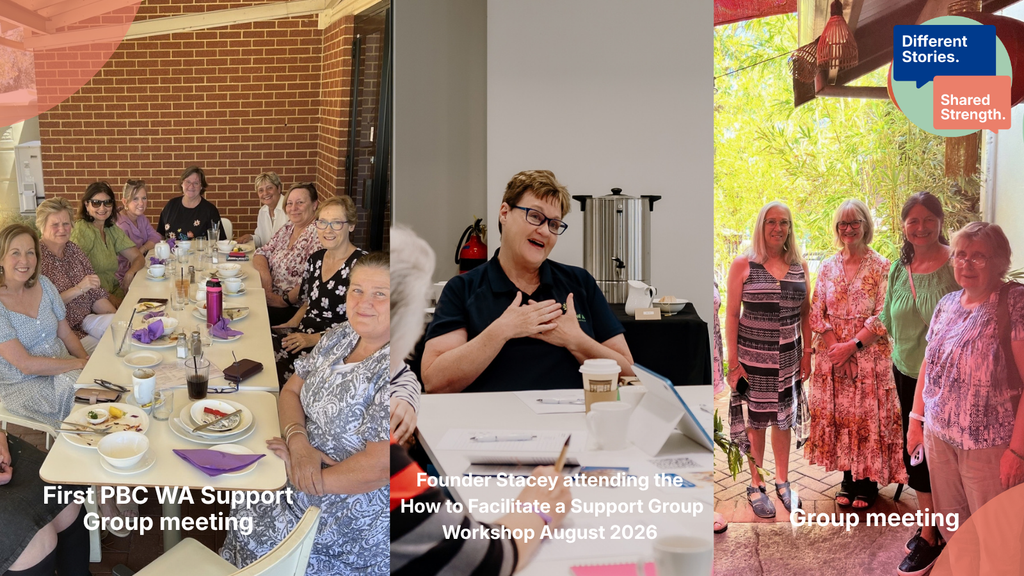
The group was established in October 2025 after people affected by PBC came together at the first PBC conference held in Perth. The conference was organised by the PBC Foundation UK and Liver Foundation Australia, and the idea for a WA peer support network grew from a shared desire for connection, understanding and support.
A month later, ten members of the PBC community gathered at a café in Caversham for the group’s first official meeting.
That gathering became the beginning of an ongoing peer support community.
Finding people who understand
The PBC WA Support Group does not currently have a permanent meeting place. Instead, members meet at cafés and restaurants across metropolitan Perth, with locations chosen to make attending as accessible as possible.
The group brings together people living with PBC, as well as family members, carers and supporters. Some people arrive soon after diagnosis looking for information and connection. Others may have been living with PBC for years but have never met another person with the condition.
For founder and lead facilitator Stacey Priddle, that shared experience is an important part of what makes the group different.
“Peer Support provides a safe place to share experiences, ask questions, celebrate successes, discuss challenges and build meaningful connections with people who genuinely understand the realities of living with PBC.”
There is no expectation that someone joining the group for the first time needs to immediately share their story. Stacey describes the meetings as warm and informal, with people able to participate in whatever way feels comfortable.
Sometimes, simply sitting down for a coffee with someone who understands is enough.
Living with an illness others may not see
One thing Stacey wishes more people understood is that PBC can be an invisible illness.
Someone may appear healthy while experiencing symptoms and emotional challenges that affect their quality of life. For Stacey, greater understanding, patience and compassion can make a meaningful difference.
She also wants to challenge a misconception that PBC is caused by alcohol consumption.
As Stacey explains that PBC is a rare autoimmune liver disease. Yet people living with the condition can encounter assumptions that their illness is related to alcohol simply because it affects the liver. These assumptions often leave those affected with feelings of judgement and blame for an illness they did not cause
Raising awareness is therefore about more than helping people recognise the name of a rare condition, it’s about helping create a greater understanding of the experiences of those living with it.
A community built around shared experience
For many members, Stacey says the group means knowing they are no longer alone. “The PBC WA Support Group is more than a support group. It’s a community of people who genuinely understand.”
Members may arrive with different experiences of diagnosis, treatment and everyday life, but there is comfort in not having to explain everything from the beginning.
As Stacey puts it, “we may all have different stories, but PBC brought us together. What keeps us together is friendship, understanding, and the knowledge that none of us has to walk this path alone.”
That sense of connection sits closely with this year’s Support Groups Awareness Week theme, Different Stories. Shared Strength.
For the PBC WA Support Group, shared strength is not about how large the group becomes. “The strength of our group isn’t measured by how many members we have. It’s measured by the friendships we build, the voices we empower and the confidence people gain when they realise they belong.”
It is a particularly fitting reflection for a group still relatively early in its journey.
What began with ten people gathering together has become a community where people can find friendship, practical understanding and reassurance from others with lived experience. “Our greatest strength is not that we all have PBC. Our greatest strength is that we now face it together!”
Looking ahead
Stacey hopes for a future where no one diagnosed with PBC feels alone, misunderstood or overlooked because they are living with a rare disease.
She would like to see greater awareness of PBC among healthcare professionals and the wider community, earlier diagnosis and faster access to specialist care, and greater recognition of lived experience within healthcare and support services.
She also hopes there will be more opportunities for people affected by PBC to find peer support, connection and education.
Most importantly, she wants people receiving a diagnosis to know that support is available.
For a group that began less than a year ago, that message captures why creating a place to connect mattered in the first place.
“Peer Support is powerful because when people come together through shared lived experience, they find more than just information. They find friendship, belonging, understanding, hope, and the strength to move forward together.”
Connect with PBC WA Support Group
The PBC WA Support Group is continuing to grow, with upcoming meetings shared through its WhatsApp group and the Australian and NZ PBC Facebook Event page.
Email: saylas@westnet.com.au
Phone: 0437 314 260 (Stacey)